Author: Elizabeth Reves

  • Client Presentation

    Each group will give a 20 minute presentation about the website project they have been working on. Remember – this is a technical presentation for non-technical people. If you need to run anything by a non-tech person, remember that I am here for you.

    Practice is Tuesday, April 26 in the auditorium. CSS will go at 12:15 (sharp), and Rocket will begin at 12:45 (sharp). Have your outlines prepared by then and have done your practice of your individual parts. Be sure to use a timer when you practice.

    Just as your project has been a group effort, your presentation should be as well. Each member will explain their role and contribution.  Each group member MUST have a speaking part and the presentation should flow well between each speaker.  Plan very clear transitions between each speaker.  Such as, “Now that I have shown you how the data supports this project, I will turn it over to Mary who will discuss some concerns we had on this project.”

    Your website will be your visual aid, so organize your speaking parts on who will show and speak to what part.  The demonstration of the website is a very important part of this presentation, so practice with that.  You may use one or two PowerPoint or Google Slides such as a title slide and one with your group name, members’ names and titles, etc.

    Remember your professionalism…..dress in business casual, use great eye contact, speak up, stay professional while your other group members are speaking and direct your attention to them.  Remember to explain any technical jargon that you may use.  Be prepared for Q&A afterwards.

    Here is a suggested outline:

    • Opening
      • Introductions
      • Website
    • Transition
    • 1st Main Point
    • Transition
    • 2nd Main Point
    • Transition
    • 3rd Main Point
    • Transition
    • 4th Main Point
    • Recommendations for Future
    • Thank the people for their time
    • Q & A

  • The Client Meeting

    The Client Meeting

    https://www.creativeboom.com/tips/10-surefire-ways-to-completely-rock-your-first-client-meeting/

    Visit the website above and use it to come up with a list of things you will do to: prepare for your first meeting with your client, discuss with your client during the first meeting, how you will follow-up after the meeting.

    When you have your “Before, During, and After list all ready to go, post it on your blog. Detail counts! If you say you are going to prep for the meeting, what does that entail? If you say you will dress professionally, what exactly will you wear? Have you tried it on lately? Post pandemic-lock down, does it still fit? If you say you are going to make small talk for two-minutes, how will you know what to talk about?

    This may seem like a big detailed project, but you will be glad you did it! It will be very useful in preparing for your meetings with your client. Being prepared is the best way to alleviate the communication anxiety associated with meeting a client for the first time.

    Due: March 13. 2022

  • Peer Review Reflection

    Due: February 20, 2022

    Take some time to think about the in-class peer review on Thursday, February 17 and answer the following questions:

    1. Were you able to use the Sandwich Method in your discussion with your partner? If so, did you have any problems using this method?
    2. Do you feel your collaboration session went well? Why or why not?
    3. Did you feel comfortable critiquing your partners work?
  • The Ideal Team Player

    The Ideal Team Player

    January 25, 2022 Due: January 30

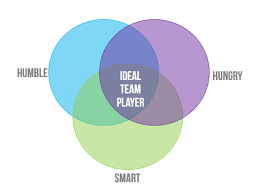
    Today we watched a TED Talk from Patrick Lencioni. In this video, we

    are asked to take stock in ourselves and see how close we are to being the Ideal Team Player and to examine what virtues of this ideal we are strongest in and most lacking in. That’s your Success Skills homework for this week.

    Book Summary - The Ideal Team Player by Patrick Lencioni

    Watch the video again, give it some thought, and write a blog that tells me what your strengths and weaknesses are as far as being Humble, Smart, and Hungry. Be sure and tell me why. After you have written about your strengths and weaknesses, tell me what you are going to work on strengthening (it should probably be your greatest weakness of the three) and a possible plan for overcoming that weakness.

  • High Achieving Teams: Death to the Super Chicken

    Cartoon Happy Farm Scene - Crowd of Happy Hens Sitting Stock Illustration -  Illustration of happy, joyful: 78475911

    Thursday, January 20, 2022

    Today we talked about the highest performing teams and spreading the “shine” among group members. The Margaret Heffernan TED Talk we saw in class is attached for you to watch again to remind you to not peck each other to death!

  • 1/18/22                          Working In Groups: A Little Inspiration

    1/18/22 Working In Groups: A Little Inspiration

    Watch the video about the formation and early days of Pixar, then write a blog about how the group came together and how their diverse backgrounds added to the success of the organization. Questions to answer in your blog: 1. Who were the founders and what were their backgrounds, 2. How was the new building built to be conducive to group communication? 3. What concepts of group communication did you recognize in their story? 4. What was your overall impression of how they worked together as a group? 5. What do you suppose might have happened if the group were made up of people with more similar (or the same) backgrounds?

    Due: Sunday, January 23

  • Sales Speech

    Due Date: Thursday, December 2, 2021

    You each will give a 3-5 min presentation to “sell” yourselves to your classmates for placement in to groups for next semester. You will prepare a typed, formal outline for the speech that will be turned in on your blog the day right you speak (Dec. 2nd). I have provided a template below that you are to use to create that outline. For your visual aid, you will create a power point with no more than four (4) slides. As you present your speeches, your classmates will take notes as part of their own grade. 

    Please use the following preparation outline:

    Introduction:

    I. Attention Getter: (Tell us something that will immediately grab our attention)

    II. Listener Relevance: (Tell us why we should listen to this presentation)

    III. Speaker Credibility: (What research/personal experience make you credible on this topic) 

    IV. Thesis Statement: (In one sentence, what is the goal of your speech?) 

    V. Preview: (Tell us specifically and concisely, in order, what your main points will be.) 

    Transition: (Take us to the first main point)

    Body:

    I. Main Point One:

    Listener Relevance Link: (Tell us how this point connects to us)

    A.

    1.

    2.

    B.

    1.

    2.

    Transition: (Take us to the second main point)

    II. Main Point Two:

    Listener Relevance Link: (Tell us how this point connects to us)

    A.

    1.

    2.

    B.

    1.

    2.

    Transition:(Take us to the conclusion)

    Conclusion:

    I. Restate Thesis (Restate the main idea of the presentation)

    II. Main Point Summary (Explicitly review the main points you talked about)

    III. Clincher (Refer back to attention getter)

  • Assignment: Cultural analysis of IT Minor Class

    Due Date: Sunday, November 14, 2021

    Format: Typed, Double spaced, Include opening paragraph, Body, Closing paragraph, turned in on your blog.

    Organizations are created to accomplish goals. In the process of working toward those goals, a culture develops. A culture is the character and personality of your organization. It’s what makes your organization unique and is the sum of its values, traditions, beliefs, interactions, behaviors and attitudes.

    A part of your project experience will be to identify and describe the culture of the organization with which you are working. We are going to use this class for practice in identifying the elements of an organization’s culture.

    Most of us are at least subconsciously aware of the culture of any group or organization of which we are members. Several of the elements are discovered by participation within the group while others are realized through observation. Some of the major elements of culture are:

    Rites, ceremonies and rituals ( Rites of passage)
    Fairy tales, myths, stories and legends (Stories passed down)
    Heroes (Idealized founders, etc.)
    Language (What style is used)
    Humor and play (Reduce tension, build rapport, share positive feelings)
    Rules (The code that must be followed)
    Metaphors (may be used to break down issues, etc.)
    Physical setting (Physical environment)
    Stories (Specific stories told or passed down)
    Values (Behaviors that do not change)


    To understand the “cultural identification” process USE THIS CLASS as an example. From the 10 elements above, CHOOSE 5 and describe this class in those terms. You will need to include examples for each element.

    ***Remember to use examples to support your element choices. This is often the most forgotten part of this assignment.

  • Tuesday, October 5

    Today we talked about why we do what we do, and using that story to follow us (or buy our product, or vote for us, etc.). This is just one of the facets of what makes a good leader, and we will be talking about leadership throughout the class.

    Here is the link to the Simon Sinek TED Talk we watched in class. Yes, it’s an older talk, but the discussions and research regarding the limbic brain and how we can best use that knowledge in various fields continues.

    Assignment: Due Sunday, October 10, 2021

    So that you will be able to tell people “who you are”, create a blog post that tells us who you are and why you do what you do (and what you want to do). Don’t worry, this will evolve over time as you realize who you are and what brings you joy. You may want to ask the people in your life for help – ask them “what reasons have I given you for wanting to go into this field?” People who love you pay attention – they will have answers.

  • Job Fair October 12th, 2021!

    Here is some information for the upcoming STEM Career Fair at Jack Stephens Center on Tuesday, October 12 from noon to 3:00.

    Here is the registration link to the upcoming job fair. You will want to have your resume updated before you begin the registration, because there is a place to upload it. Get registered today!!

    Register

    Go straight to the job fair rather than coming to class. Thomas, Bruce, and Elizabeth will be standing near the door to take roll for our classes. Make a point of looking for them to sign in.

    You should always prep before attending a career fair. In addition to registering in advance, check out the list of exhibitors and research them. Keep in mind that companies famous for one thing (ex. a clothing retailer) also has dozens or hundreds (or thousands) of positions that don’t involve folding sweaters.

    Here is a page from another university’s website with some great tips for success at a career fair.

  • Thursday, September 9, 2021

    Tuesday, we looked at how we spend our time. Fabulous! Now we know what we do with our days. Hopefully, we have found a few things that we do to waste our time, so we can throw that stuff away and have more time to spend on those things we need to do – like our Topaz projects!

    So how do we prioritize new tasks? Make long range plans? Short range plans? As a teacher, I do this every semester and what I have for you is a version of how I do that. I call it backwards planning – I’m sure there is some really snazzy word for it, but I’m a simple person and I think backwards planning says what it needs to say. Here goes:

    1. Using a clean sheet of paper, list your tasks.
    2. Estimate how much time it takes to complete each task.
    3. Eliminate unnecessary tasks from your list, drawing a line through each. (Are you doing these tasks because you must or because you feel you should?) Notify others if necessary, explaining that you’re currently too overwhelmed. You’ve already freed up a significant amount of time.
    4. Delegate some tasks to others. Are there tasks your spouse, children, or coworkers could be doing? Put a check-mark next to tasks you’ll delegate, or pass along, to others. Write name(s) next to each task. Successful delegation takes some finesse.
    5. Prioritize your tasks by numbering them in order of importance. If you have difficulty establishing what’s most important, ask yourself what’s necessary to fulfill your basic needs, what’s necessary to be successful at work, and whether you have any deadlines to meet. If so, write them next to the appropriate tasks.
    6. Create an Action Plan for large tasks. If you have a really large task and are working in a team, you can also work with your team to create an action plan. An action plan is a list of steps that must be done to complete a larger task or goal. Details are below.
    7. Establish a deadline for the project. For me, it’s always the last day of the semester.
    8. Work backwards. Once you have the task that make up the project lined out and know approximately how long each will take, put them in order from last to first and use the time estimate (#2 above) start plugging the tasks into your calendar.

    Creating an action plan

    To create an action plan:

    1. Determine the measure of success for each task.
    2. List each step it takes to complete the task.
    3. Establish the best way to complete the task. Consider experimenting with different methods and asking for advice.
    4. Find ways to multitask, or do more than one thing at once.
    5. Assemble the people and resources you need to create your action plan.
    6. List possible rewards or incentives.

    You’ve made a significant investment learning ways to better manage your time. Do your best to follow through with your action plan. Work with your team to create and fine-tune the plan if necessary. Refer to it when you feel overwhelmed. And learn to say “no” to new tasks. When you’re ready, refer to the list of things you wish you had more time for and begin folding those things into your routine.

    Assignment:

    There is no immediate assignment for today’s lesson. You will use this information when you begin your team project and be graded on your time mamagement and action plans at that time.

  • Tuesday, September 7, 2021

    This week, we will be talking about time management and prioritizing our time. There are probably a million ways to do this and what works for some may not work for others. This method is one of the best I have found. It really makes us consider what we find important in our lives and how much time we waste doing things that aren’t really important to us at all. It takes a little time (yep! time management takes time), but it is well worth the effort.

    Time/Priority Management
    There are many tools to help someone with managing their time. One of the best places to start is to manage your priorities. What is a priority? Well for me, my job is a priority. So are my friends, my doggie, and my hobbies. I also like to eat. Sleeping is important too!
    Throughout life our priorities will change and that is okay. Right now, this class should be high on your priority list. So should your health. But we are all different and have different desires in life. What we are going to try to accomplish today is find what is most important to you and how to put that into your weekly schedule.

    First, let’s make a list. Write down on a Word or Google doc., in no particular order, what you spend time on during a given day and throughout a typical week. Once you have your list I want you to number this list with number 1 being what you send the most time on, then 2 being the second most time, and so on.

    Second, I want you to make another list next to or below the one that you just made. This list is what you think are your priorities. There is a high probability that the same words show up on both lists. Now just like you did with your first list I want you to number your priority list. Number 1 is what you feel is of the highest
    priority down to your lowest priority. Do your priorities match up with what you spend most of your day doing?

    Third, watch the video below by Laura Vanderkam on TED Talks, How to gain control of your free time. You’ll want to take notes of main ideas or concepts that stuck with you. With the assignment you’ll need to write a few sentences on what you learned.

    https://www.ted.com/talks/laura_vanderkam_how_to_gain_control_of_your_free_time.


    Here is an article by Laura Vanderkam found on her website that is very useful as well.


    Fourth, I want you to make a list of the things you value (love, wealth, family, nature, popularity, freedom, friends, power, etc). Same as your lists from earlier, number them from 1 being what you want to spend the most time on during the week down to the least, or what you want your highest priorities to be down to your lowest priority. Now compare the three lists. Are they the same? Do you spend your week doing the things you value the most? Are your priorities in line? Are you ready to make a change to your typical week?

    Fifth, download this excel sheet, Time Management. You will need two copies of this excel sheet. For the first schedule, fill out what your typical week looks like right now (normal work/school week). It should include everything that you do (eat, meal prep, sleep, study, work, commute, play video games, spend time with family, etc.) in your current week. Exactly how you spend your time. Every minute of it. How does it look?

    For the second schedule you are to make your schedule based on your values/what you want to make a priority. Hopefully this is very similar to our first schedule, but there is a chance it will be completely different. This should be based off of your priority list. The higher the priority, the more you should see it in your schedule. Now this should be realistic. Make it something that you can apply to your life right now. What can you do to make your priorities and values line up with your typical week?

    We want to spend more time on what matters and less time on what doesn’t. We need to understand our values, priorities, how much time we actually have, and how we want to spend it. Let’s make a little change that can have a positive impact on our daily lives.

    Here is what you accomplished with this worksheet:
    1. A short paragraph (minimum of 5 sentences) of what you learned from the video.
    2. A list of what you spend time on today.
    3. A list of what you prioritize today.
    4. A list of what you want to prioritize tomorrow based on your values.
    5. Two schedules, one of what your week looks like now and one of what you want it to look like.
    6. A better understanding of who you are and what you spend your time on.

    Assignment

    See the Fifth step above and prepare your two Excel Spread sheets. Add these to your blog by Sunday, September 19 along with a short narrative of how your restructured your schedule to find more time for what is really important to you. Keep in mind, this is a good way for your possible teammates to see how you well you can prioritize tasks and get work done!


  • Tuesday, August 31 and Thursday, September 2, 2021

    Recap:

    Today we talked about the Myers-Briggs Type Indicator (MBTI) and discovered the distribution of types in our group. We also talked about how a good mix of personality types in group work can make us more successful in our tasks. While there are other things we will examine later in the semester that contribute to creating and supporting effective teams, knowing our own preferences is certainly a good place to start.

    Here is the distribution of personality types in the Topaz cohort:

    Hannah DardenINTJ
    Alexander MaISFJ
    Johnnie SmithINTP
    Nicholas CornENFJ
    John BryantINTJ
    Dareon BuffingtonINFJ
    Lillian McNeelyINTJ
    Josephine WeathingtonINTJ
    Cicely OrrENFJ
    Michael GrayENTP
    Eli BrewerINFJ

    Links to websites we discussed in class:

    https://www.myersbriggs.org/my-mbti-personality-type/mbti-basics/

    https://www.16personalities.com/personality-types

    Assignment Due Thursday, September 9:

     After using the above links to better understand the personality tool and thinking about the preferences you expressed in the different categories, answer the following questions on your blog. Be sure to add a catchy header to your blog that you think reflects your personality.

    1.  Based on what you have learned about your MBTI profile, what do you need/expect in your work environment?
    2. What type of leader do you expect to be and how does this profile reflect that?
    3. When working on a team/in a group, how do you think knowing the other people’s profiles would change the group interactions?